IMAGE ESSAY
Anatomy of a Photograph: Mariachis in the Courtyard at Omni La Mansión del Rio | Leica SL3-S
July 2026 – Image of the Month: Just After the Ceremony – A documentary wedding photograph made just after the ceremony at Omni La Mansión del Rio in San Antonio, with mariachis, movement, and layered storytelling.
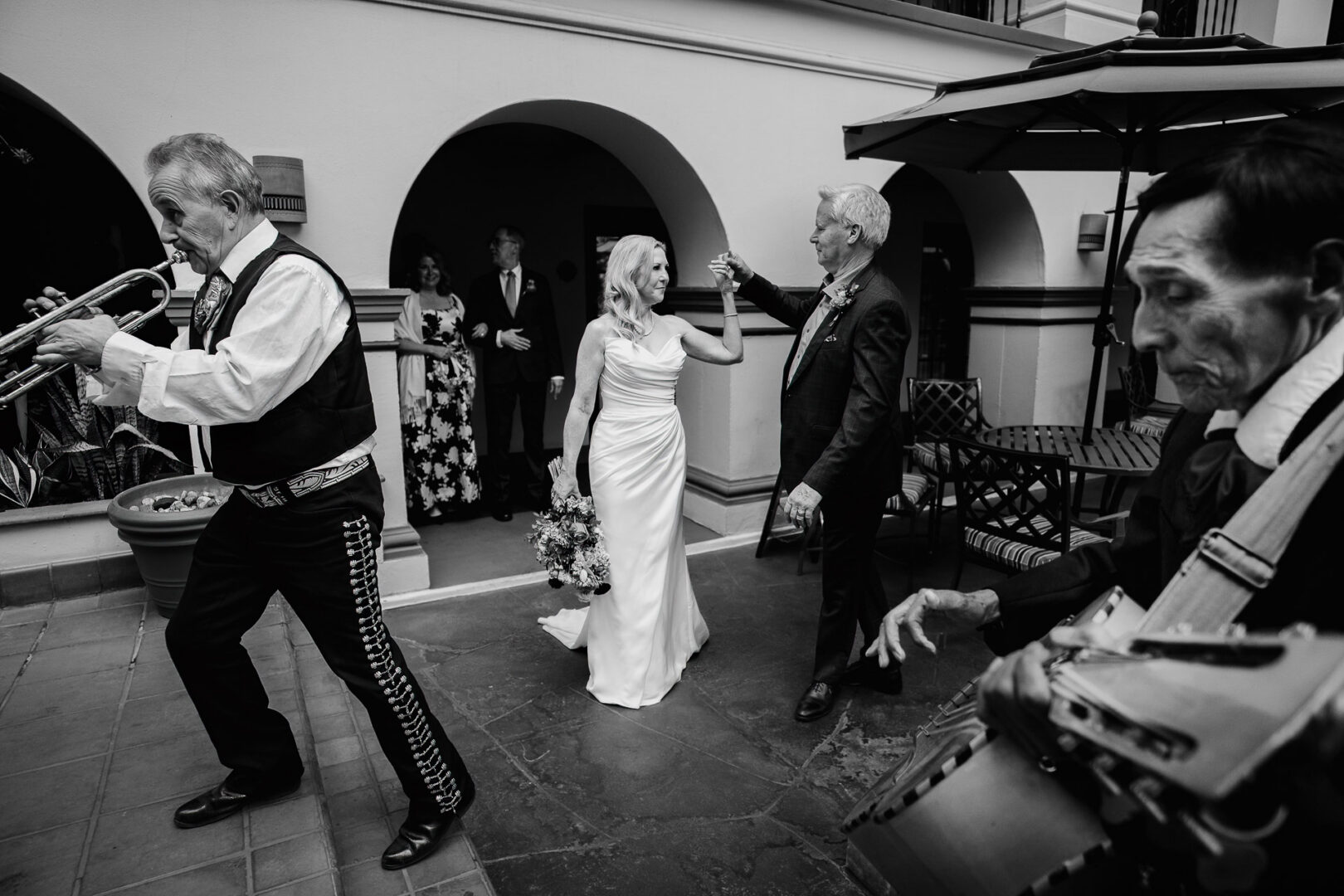
Some wedding photographs do more than record a moment — they play out like a scene unfolding right in front of you. This one, taken moments after the ceremony at the Omni La Mansión del Rio in San Antonio, is exactly that kind of photograph.
The couple had barely stepped into the courtyard when the mariachis struck up. The bride and groom at the center, a trumpet player sweeping across the left of the frame, a second musician holding the right, and the family watching on from beneath the hotel’s arches. Gesture, timing, layered depth, movement, a strong sense of place — everything I chase in documentary wedding photography, all in one frame.
I shot this on a Leica SL3-S with a 21mm Elmar. A lens this wide brings its own kind of energy; it pulls the viewer into the moment rather than letting them watch from a distance. But shooting wide means shooting close, and that changes everything about how a photograph feels. The trumpet player becomes more than a background detail — he’s a visual anchor. The second musician adds tension and depth. The couple remains the emotional center, but the photograph itself is built from everything happening at once.
Depth of field does a lot of the work here. A wide lens lets me keep the foreground, middle ground, and background all in focus, so the subject never feels cut off from the world around them. I wanted the eye to travel: first to the bride’s dress, then to the groom’s gesture, on to the musicians, and finally out to the guests framed in the archway. This isn’t a portrait. It’s a scene — and the story comes from how its parts talk to each other.
My background in street and documentary photography shapes almost everything about how I photograph weddings. Garry Winogrand‘s crowded, layered street work taught me to use the whole frame, right out to its edges, and to trust the energy of real life rather than direct it. Henri Cartier-Bresson’s instinct for timing and geometry is never far from my mind — not as something to imitate, but as a reminder that instinct and composition can meet in a split second. James Nachtwey, in a very different register, has shaped how I think about commitment and presence: being there fully, without interfering.
Those influences follow me onto every wedding day. I lean on ideas like dynamic symmetry, geometric composition, and Gestalt psychology to find order inside the beautiful chaos of a real wedding. Rather than staging moments, I try to watch quietly and let them happen — inspired as much by painters as by photographers. I’m not interested in wedding photographs that look posed or too polished. I want the real thing: the humor, the elegance, the imperfections, the small gestures, the moments nobody planned. Weddings are full of them. They rarely announce themselves — you simply have to watch, wait, and be ready when it all lines up.
What I love about this photograph is how alive it feels. You can sense the music, the movement, the San Antonio architecture, the closeness between the couple, and the unpredictability of something real happening in real time. That, to me, is what documentary wedding photography is for — not just recording what happened, but capturing what it felt like to be there.
For more like this, including the current image of the month, have a look here.