The Balance of a Moment | Documentary Wedding Photography
A Documentary Wedding Image Study from The Astorian in Houston
I keep coming back to this photograph.
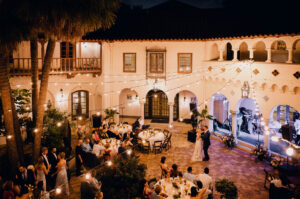
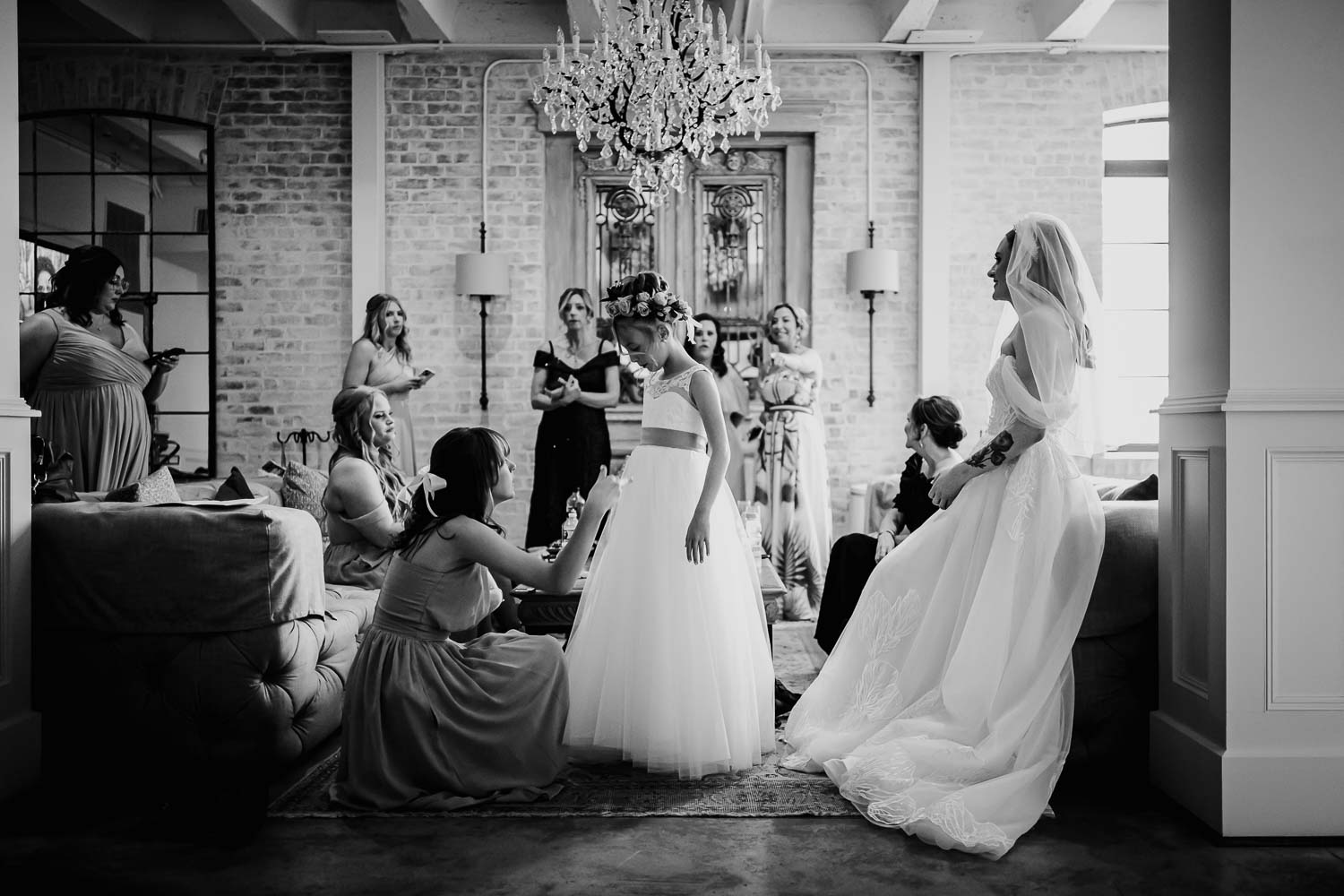
I made this photo at a wedding at The Astorian in Houston. It was a quiet moment—nothing posed, but a lot unfolding. The bride is just inside the frame, the flower girl stands near the center, and the bridesmaids gather around. For a split second, everything fell into place.
That is the kind of image I’m always looking for. I don’t chase the obvious or posed moments. I look for those brief, natural scenes that come together on their own and then quickly disappear.
The Decisive Moment at a Wedding
Henri Cartier-Bresson’s idea of the decisive moment has influenced photographers for years. When I first heard it, I didn’t really understand. But after years of photographing weddings and watching people, I learned how fast a scene can change and what the decisive moment truly is.
At a wedding, the decisive moment is rarely dramatic in an obvious way.
It might be the way someone places a hand, the direction of a glance, a child pausing, or how the light separates people in the frame. Often, it’s less about action and more about how everything fits together.
In this photo, everything came together at once: the bride, the flower girl, the bridesmaids, someone kneeling, the light, the chandelier, and the edge of the frame. No one noticed the camera. Nothing was set up. I had to catch the moment as it happened.
Figure-to-Ground and Why It Matters
One of the reasons this photograph works for me is the figure-to-ground relationship.
The flower girl and bride are easy to see in the frame. They stand out from the background but still feel part of the scene. The bridesmaid kneeling in front adds depth without detracting from the main subject.
That separation is important. If I had cropped the photo too closely, the people would look cramped. Cutting off too much at the bottom would throw off the balance. The subjects need enough space around them so your eye can move through the image.
In documentary wedding photography, you have to figure out the composition in the moment. There’s no time to tidy up or move people around. You work with what’s there.
Watching the Edges
While I was composing, I was also watching the edges of the frame.
The bride’s gaze, the bridesmaid on the far left, how people are standing, and the shapes around them all matter. Even a small distraction at the edge can draw your eye away from the main part of the photo. This is called edge flicker, and it can make a strong photo weaker.
A good documentary frame is not only about what is happening in the center. It is also about what is happening around the edges.
You develop that awareness with practice and by slowing down enough to see the whole frame, not just the main subject.
Balance, Weight, and the Center of the Frame
The flower girl acts almost like a visual anchor in this photograph.
She sits near the center, with the bride and bridesmaids adding balance on each side. The chandelier above helps balance the scene too. The people on the left and right balance each other, so the photo feels structured but not forced.
That is one of the things I love about documentary photography.
The frame can feel composed, but not staged.
The aim isn’t to force order onto the scene. It’s to notice order when it naturally shows up.
The Value of a Quiet Approach
I could not have made this image by interrupting the room.
It took patience, careful observation, and a quiet approach. Over the years, this has become more important to me. The less I interfere, the more genuine the photos are.
Weddings are full of small, unscripted moments like this. You can miss them if you rush, direct too much, or only look for the big highlights. But if you stay still, pay attention, and let people act naturally, you often capture something better than anything you could plan.
This is where wedding photography and street photography overlap for me.
Both require anticipation. Both require restraint. Both reward patience.
Still Learning to See
I keep studying photography, art, design, and composition because there’s always more to learn. Books, workshops, online resources, and just looking closely at photos all help me improve my eye. But in the end, I always come back to the same lesson:
Stand still.
Watch the edges.
Wait for the frame to come together.
Do not interrupt too soon.
This photo reminds me why I approach wedding photography the way I do.
It’s not about controlling every moment. It’s about being ready when something real happens.